
The platform

One verification layer. Every unit.

Chip, audit log, dashboard, and app — engineered as one.

Aeroz sits on top of TraceLink, Antares Vision, and MediLedger — adding cryptographic unit identity and an audit-defensible custody record without a rip-and-replace.

Fixed fee 14-day written report No commitment to proceed
EPCIS 2.0GS1 Digital LinkAES-128NFC · UHFAppend-only log<300ms verifyWeb · iOS · Android
4
Chip, audit log, dashboard, and app — one layer, not four tools to integrate.
<300ms
Field verification — a phone tap or dock read confirms a unit is authentic.
0
Sits on top of TraceLink, Antares, and MediLedger. No replacement required.
What the layer is

Four components. One layer.

A dual-frequency chip on the unit, an append-only log of every event, a dashboard to run it, and an app to verify it — built to work as a single system.

01 · The chip

Dual-frequency. AES-128.

NFC (13.56 MHz) is phone-readable at the point of use. UHF (860–960 MHz) is dock-readable at distance. One encrypted identity across both.

Frequencies13.56 · 860–960 MHz
IdentityAES-128
Activation72h No-Encode
02 · The audit log

Append-only. Signed.

Every scan, seal-state change, and approval lands in an append-only ledger — no UPDATE, DELETE, or TRUNCATE for any role. EPCIS 2.0 native and Form 3911-ready.

ModelAppend-only
StandardEPCIS 2.0
SigningPer-event AES
03 · The dashboard

Run every unit from one desk.

Manage brands, products, chips, sellers, and custody — and watch every scan, seal state, and location update on a live, append-only record.

ScopeBrand → unit
CustodyReal-time
ExportsEPCIS · 3911
04 · The app

Verify anywhere in the chain.

A verification app for the dock, the dispenser, the regulator, and the consumer phone. One scan returns authenticity, custody, and seal state in under 300ms.

Latency<300ms
PlatformsWeb · iOS · Android
ModesNFC tap · UHF
Sits on top of your stack

Additive, not a replacement.

Your serialization stack does what it was built for. Aeroz adds the verification layer it never had — bound to the same standards, so nothing has to be torn out.

Events flow as native EPCIS 2.0, and every unit resolves through a GS1 Digital Link URI — the same identifiers your existing systems already speak.

TraceLinkAntares VisionMediLedgerEPCIS 2.0GS1 Digital Link
Event standardEPCIS 2.0
IdentifierGS1 Digital Link
Carton serializationPreserved
Unit authenticationAdded
Pilot to live4–8 wks
Systems removedNone
How it connects

Standards-native by design.

EPCIS 2.0

Events, not silos

Commission, ship, receive, and dispense are written as standard EPCIS 2.0 events — readable by any compliant system you already run.

GS1 Digital Link

One URI per unit

Each chip resolves through a GS1 Digital Link URI that carries GTIN, lot, and serial — the bridge between the physical unit and its record.

No rip-and-replace

Layered, not swapped

Aeroz consumes and emits the identifiers your stack produces. Serialization stays; authentication is added on top.

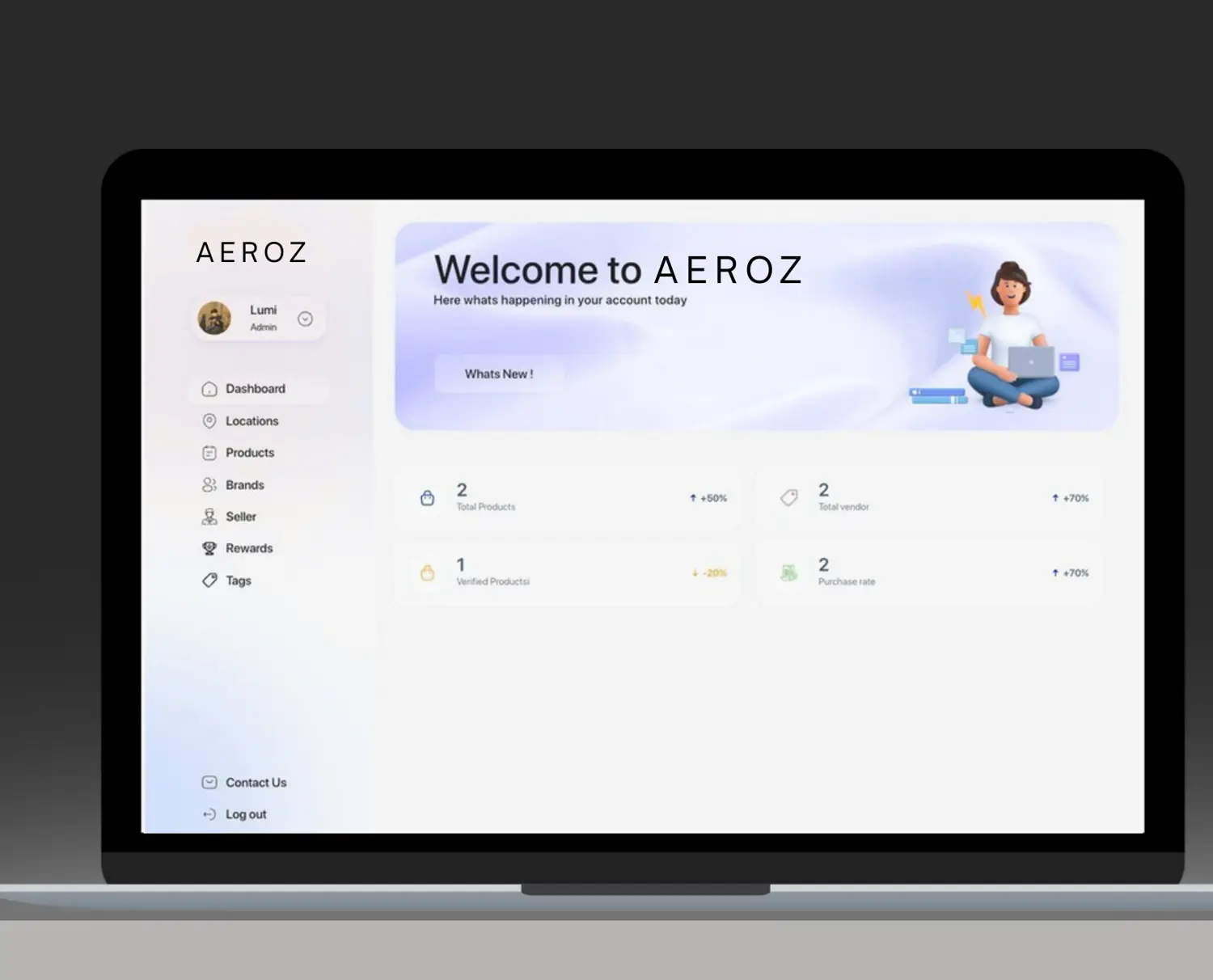
The dashboard, today

One portal. Every unit. Real-time.

Manage brands, products, chips, sellers, and rewards — and track every unit's chain of custody live, with every scan, seal state, and location on an append-only record.

app.aeroz.io/custody
The Aeroz operations dashboard showing live chain-of-custody for tracked units
How a scan works

From line to audit-ready.

Five steps take a unit from the packaging line to a record you can defend in front of a regulator.

1
Apply at line

A dual-frequency chip is bonded to the unit during packaging.

2
Activate

The 72-hour No-Encode workflow assigns an AES-128 identity.

3
Custody events

Each handoff writes a signed EPCIS 2.0 event to the log.

4
Field scan

A phone or dock reader verifies the unit in under 300ms.

5
Audit-ready

Full custody and authenticity, pullable in seconds.

From silicon to shelf

One layer across the whole chain.

Macro view of a silicon circuit, representing the dual-frequency chip Chip · unit identity
Abstract data network, representing the append-only audit log Audit log · EPCIS 2.0
Automated warehouse, representing dock-level UHF verification Dock · UHF verify
Verification-readiness audit

See where you're exposed — in 14 days.

A fixed-fee Aeroz audit produces a written gap analysis against your regulation, an EPCIS 2.0 readiness assessment of your stack, and a scoped plan to add the verification layer — with cost and timeline.

Turnaround
14 days
Engagement
Fixed fee
Deliverable
Written report
Commitment
None to proceed
Fixed fee 14-day written report No commitment to proceed

What's included

  • Gap analysis against your regulation and current stack.
  • EPCIS 2.0 readiness across TraceLink, Antares, MediLedger.
  • Component mapping — chip, log, dashboard, app to your lines.
  • Scoped remediation plan with cost and timeline.
  • Pilot scope for unit-level verification on one SKU or line.